How Long Do Solar Roof Mounts Last and What Maintenance Is Required?

When people think about going solar, they usually picture shiny panels soaking up the sun on a rooftop. But there's a less glamorous hero holding it all together: the solar panel roof mounts. It's not flashy, but it's the backbone of the whole operation. And just like any structure exposed to the elements, it brings up two important questions: how long will it last, and what kind of maintenance does it need?


They’re Built to Stick Around – But for How Long?

A well-made solar mounting system, especially one built from high-grade aluminum or stainless steel, can easily last 25 to 30 years, sometimes even longer. In most cases, they’re designed to outlast the solar panels themselves. That said, the real answer is: it depends.


For example, I once visited a site in coastal Florida where salty sea air had started corroding a cheaper steel mount within ten years. On the other hand, a house up in dry Arizona still had perfectly solid mounts after nearly three decades. Environment plays a huge role.


Here are a few things that can influence the lifespan:

Material matters – Aluminum alloys resist corrosion better than standard steel.

Climate counts – If you live in a high-humidity or snow-heavy zone, your mounts take more abuse.

Roof type – A solid concrete roof? Great. Brittle old shingles? Not so great.

Installation quality – This one’s big. A rushed job can create water leaks or structural issues that shorten the life of the entire system.


Do I Need to Maintain My Solar Mounts?

Short answer: a little goes a long way.

They don’t need much, but ignoring them entirely? That’s where problems start. You don't need to climb up there every month, but a yearly or bi-yearly checkup—even just from the ground or using a drone—is smart.


Here’s what to look out for:

Loose bolts or shifting panels – Winds can cause micro-movements over time.

Rust or corrosion – Especially in humid or coastal areas.

Water intrusion – Look inside your attic or ceiling for any signs of leaks near where the mounts penetrate the roof.

Debris buildup – Leaves, dust, and bird nests love to settle near roof brackets.


If you’re unsure, having a solar technician take a look every few years is money well spent. I've seen homeowners save thousands just by catching a loose fastener before it caused bigger roof damage.


Will I Need to Replace Them?

In most cases, you won’t need to touch your mounts when it’s time to replace the panels—unless they’re damaged or incompatible with your new setup. But if you're also redoing your roof, or if the mounts look aged or show clear signs of stress, it may be worth swapping them out too.


There’s no hard rule, but think of it like replacing the soles of your shoes. If the bottom is worn out but the top still looks good, it might still be time for a change.


To sum it all up: solar roof mounts are the quiet workhorses of your solar setup. They're built tough, and with even just a little attention every now and then, they’ll do their job without complaint for decades.

Solar Roof Mounts

Unveiling the Color Steel Tile Roof Support System A Comprehensive Analysis from Structure to Application

In the realm of modern architecture, roof rack solar panel for color steel tiles have emerged as a popular choice for the roofs of numerous industrial plants, warehouses, and residential buildings, owing to their lightweight nature, aesthetic appeal, and construction convenience.

The color steel tile roof support system, which underpins this “steel exterior,” acts as an invisible guardian of the building’s roof, silently fulfilling crucial roles such as providing stability, bearing loads, and resisting wind forces.

Today, let’s take an in-depth look at this indispensable component of building structures.​


I. Composition and Classification of the Color Steel Tile Roof Support System​

The color steel tile roof support system of  the mounting solar panels is not a single component but an organic whole in which multiple parts work in harmony.

Its core components include main supports, secondary supports, connectors, and fasteners.

The main supports, often made of high-strength steel, serve as the “backbone” of the entire system, primarily responsible for bearing the vertical and horizontal loads of the roof. Secondary supports, similar to “ribs,” cooperate with the main supports to further refine the load transfer path and provide a stable installation surface for the color steel tiles.

Despite their small size, connectors and fasteners play a pivotal “binding” role, firmly connecting each support component to ensure the integrity and stability of the system.​


Based on different application scenarios and design requirements, the color steel tile roof support system of the flat roof pv panels can be classified in various ways.

From the perspective of structural forms, it can be divided into the planar support system and the spatial truss support system.

The planar support system, with its relatively simple structure, is suitable for roofs with a small slope and low load requirements.

In contrast, the spatial truss support system, thanks to its three-dimensional structure, offers greater load-bearing capacity and stability, making it commonly used in buildings with high structural requirements, such as large industrial plants and stadiums.

Additionally, according to different installation methods of the mounting solar panels on roof , it can be categorized into the welded support system and the prefabricated support system.

The welded support system features high connection strength but involves a relatively complex construction process and strict requirements for welding techniques.

The prefabricated support system, on the other hand, has gradually become the market mainstream due to its modular design and easy installation, significantly shortening the construction period and reducing labor costs.​


Product Spotlight | Aluminum Elevated Fixed Agriculture Mounting System

At JinMega, we are advancing the application of solar mounting systems in agriculture with innovative designs that maximize both crop growth and solar generation. Our Aluminum Elevated Fixed Agriculture Mounting System supports installation heights up to 3.5 meters, with adjustable triangular frames for optimal sunlight penetration and energy yield. 


Why Choose JinMega?

·High-strength AL6005-T5 & SUS304, resistant to corrosion, snow, and typhoons. 

·Modular design with high factory pre-assembly for quick on-site installation.

·0°–30° single-row angle adjustment for seasonal optimization of crop light and solar output.


We are continuously developing new Agri-PV solutions and will showcase them at J AGRI TOKYO 2025 in Japan on October 1st. Stay tuned for more updates! Discover how JinMega Agriculture Solutions can maximize the synergy between crops and solar, click at www.jinmegasolar.com 

Project Highlight | 998.68 kW Steel Mounting Solution — Concrete Pole Mounting in Thailand

We’re proud to share a successful JinMega installation — a 998.68 kW solar project in Thailand equipped with our Steel Mounting Solution — Concrete Pole Mounting. This system is designed for sites where ground space is limited or challenging — from rural landscapes to uneven terrain — offering a robust, space-efficient solution for maximizing solar output.


Why it works for Thailand’s diverse terrain

·Pre-stressed high-strength foundation ideal for large-scale solar parks in diverse terrains.

·Simple construction with pre-assembly services for a faster build.

·Customized to meet unique site conditions and maximize performance.


At JinMega, we create solar mounting solutions that adapt to your environment — not the other way around. Explore how our Ground Solar Mounting System can power your next project with stability, speed, and savings. Learn more at www.jinmegasolar.com


Project Update | Rooftop Solar System in Zhangzhou, Fujian

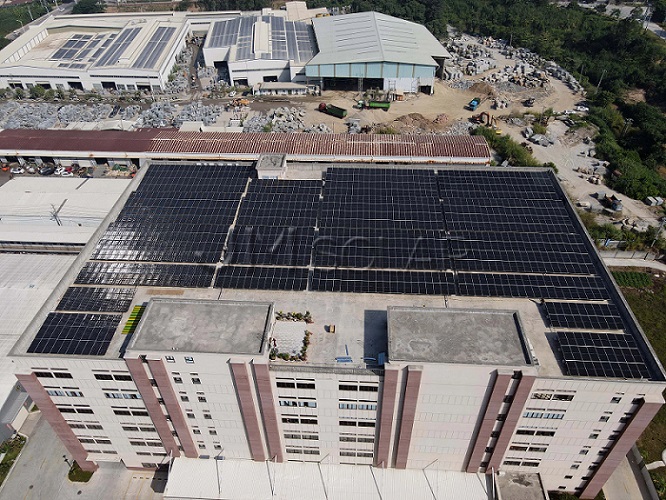
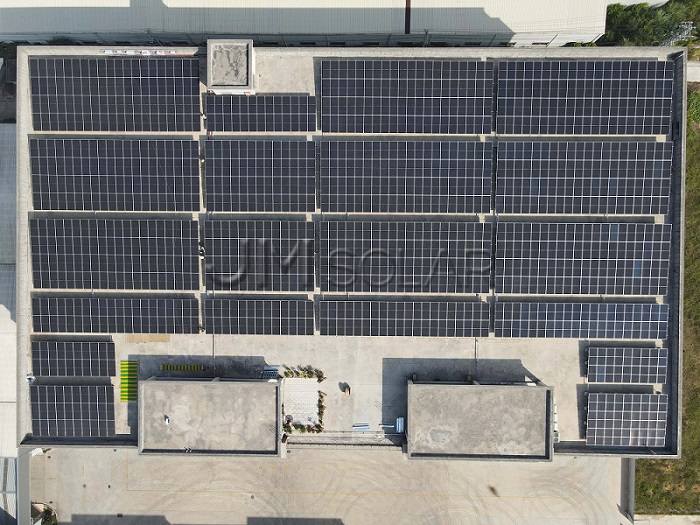
We’re excited to share another successful project delivered by JinMega — a 399.32kWp distributed rooftop solar system for Tianyi Art, located in Zhangzhou, Fujian


This C&I solar distributed project adopts the installation methods of flat roof and metal roof. The roof layout design service and mounting systems are provided by JinMega Solar, designed to ensure structural stability and long-term durability. With a projected annual generation of approximately 480,000 kWh, the project will significantly offset the client’s electricity consumption, reducing operational costs and carbon emissions.


Learn more about our rooftop solar mounting systems at www.jinmegasolar.com


HQ MOUNT On-Site in Norway | Pioneering Vertical Solar Solutions Where Geography Drives Innovation

We’re excited to share an exclusive update from our recent field visit to a cutting-edge vertical solar installation site in Norway! As a global provider of advanced solar mounting systems, HQMOUNT is proud to explore how Norway’s Arctic environment makes vertical solar a uniquely powerful solution.


Why Norway? The Vertical Advantage at High Latitudes

Norway’s geographic conditions — stretching up to 71°N latitude — present challenges that vertical solar technology turns into opportunities:


Low Sun Angle Optimization

Vertical-mounted panels are ideal for capturing the sun’s shallow trajectory in winter, ensuring optimal energy production even in low-light months.


Snow & Ice Resilience

Wall-mounted systems avoid snow burial and harness reflected light from snow-covered terrain.


24-Hour Summer Sun

Vertical panels mounting efficiently absorb extended horizontal light during Norway’s long dawns, dusks, and 24-hour sunlight periods.


Collaborating for Cold Climate Innovation

HQMOUNT is working closely with local Norwegian partners to deliver next-generation vertical solar systems designed specifically for extreme climates. These installations aim to transform walls into energy-generating assets, enabling sustainable power even in the world’s northernmost regions.


Together, we’re turning walls into energy assets!


CONTACT US---XIAMEN HQ MOUNT TECH CO.,LTD

Whatsapp : 18030160771

Tel : 86 05926252889

Email : allie@hqmount.com


#VerticalSolar #HQMOUNT #ArcticEnergy #CleanEnergyFuture #SolarMounting #NordicInnovation #NorwaySolar #CleanEnergyFuture #NordicSolar#RenewableTech

Solar Mounting Production in Full Swing at HQ Mount!

We’re proud to share a behind-the-scenes look at how HQ Mount powers solar energy projects worldwide with precision-engineered mounting solutions.  Check out our new HQ Mount 2025 video to see how SGS delivers precision-engineered solar mounting solutions:


Inside our production facility:
Round-the-clock production for solar power plants
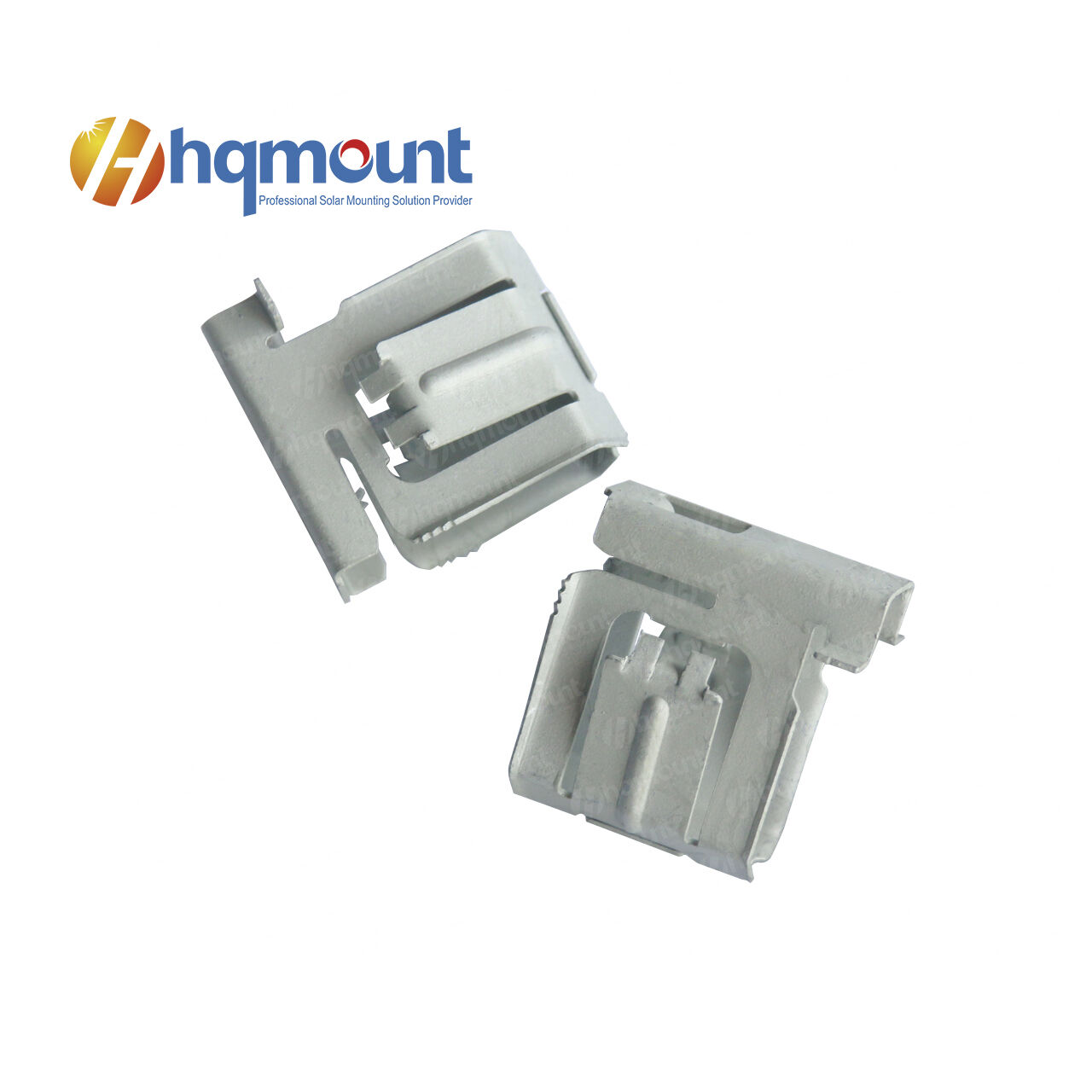
Automated manufacturing of rooftop mounting accessories
Efficient loading for on-time delivery

From rooftop solar to large-scale PV farms, we deliver customized, reliable, and scalable mounting systems to meet your project needs.


Looking for a trusted solar mounting partner?
We combine engineering precision, production capacity, and responsive service to support global solar installers, distributors, and EPC contractors.

→ Explore SGS solutions: www.hqmount.com

#SolarEnergy #RenewableTech #SolarMounting #ManufacturingExcellence #HQMount #SolarSolutions #CleanEnergy #SolarMounting

Analysis of changes and causes of lithium battery capacity attenuation!

1. Analysis of lithium-ion battery capacity attenuation

Positive and negative electrodes, electrolytes and diaphragms are important components of lithium-ion batteries. The positive and negative electrodes of lithium-ion batteries undergo lithium insertion and extraction reactions respectively, and the amount of lithium inserted in the positive and negative electrodes becomes the main factor affecting the capacity of lithium-ion batteries. Therefore, the balance of the positive and negative electrode capacities of lithium-ion batteries must be maintained to ensure that the battery has optimal performance.


2. Overcharge

2.1 Negative electrode overcharge reaction There are many types of active materials that can be used as negative electrodes of lithium-ion batteries, with carbon-based negative electrode materials, silicon-based, tin-based negative electrode materials, lithium titanate negative electrode materials, etc. as the main materials. Different types of carbon materials have different electrochemical properties. Among them, graphite has the advantages of high conductivity, excellent layered structure and high crystallinity, which is more suitable for lithium insertion and extraction. At the same time, graphite materials are affordable and have a large stock, so they are widely used.


When a lithium-ion battery is charged and discharged for the first time, solvent molecules will decompose on the graphite surface and form a passivation film called SEI. This reaction will cause battery capacity loss and is an irreversible process. During the overcharging process of a lithium-ion battery, metal lithium deposition will occur on the negative electrode surface. This situation is prone to occur when the positive electrode active material is excessive relative to the negative electrode active material. At the same time, metal lithium deposition may also occur under high rate conditions.


Generally speaking, the reasons for the formation of metal lithium leading to the change in lithium battery capacity decay mainly include the following aspects: first, it leads to a decrease in the amount of circulatory lithium in the battery; second, metal lithium reacts with electrolytes or solvents to form other by-products; third, metal lithium is mainly deposited between the negative electrode and the diaphragm, causing the pores of the diaphragm to be blocked, resulting in an increase in the internal resistance of the battery. The influencing mechanism of lithium-ion battery capacity decay varies depending on the graphite material. Natural graphite has a high specific surface area, so the self-discharge reaction will cause the lithium battery capacity loss, and the electrochemical reaction impedance of natural graphite as the negative electrode of the battery is also higher than that of artificial graphite. In addition, factors such as the dissociation of the negative electrode layered structure during the cycle, the dispersion of the conductive agent during the production of the pole piece, and the increase in the impedance of the electrochemical reaction during storage are all important factors that lead to the loss of lithium battery capacity.


2.2 Positive electrode overcharge reaction Positive electrode overcharge mainly occurs when the proportion of positive electrode material is too low, resulting in an imbalance in the capacity between the electrodes, causing irreversible loss of lithium battery capacity, and the coexistence and continuous accumulation of oxygen and combustible gases decomposed from the positive electrode material and the electrolyte may bring safety hazards to the use of lithium batteries.


2.3 Electrolyte reacts at high voltage If the charging voltage of the lithium battery is too high, the electrolyte will undergo an oxidation reaction and generate some by-products, which will block the electrode micropores and hinder the migration of lithium ions, thereby causing the cycle capacity to decay. The change trend of the electrolyte concentration and the stability of the electrolyte is inversely proportional. The higher the electrolyte concentration, the lower the electrolyte stability, which in turn affects the capacity of the lithium-ion battery. During the charging process, the electrolyte will be consumed to a certain extent. Therefore, it needs to be supplemented during assembly, resulting in a reduction in battery active materials and affecting the initial capacity of the battery.


3. Decomposition of electrolyte The electrolyte includes electrolytes, solvents and additives, and its properties will affect the service life, specific capacity, rate charge and discharge performance and safety performance of the battery. The decomposition of electrolytes and solvents in the electrolyte will cause the battery capacity to be lost. During the first charge and discharge, the formation of SEI film on the surface of the negative electrode by solvents and other substances will cause irreversible capacity loss, but this is inevitable. If there are impurities such as water or hydrogen fluoride in the electrolyte, the electrolyte LiPF6 may decompose at high temperatures, and the generated products will react with the positive electrode material, resulting in the battery capacity being affected. At the same time, some products will also react with the solvent and affect the stability of the SEI film on the surface of the negative electrode, causing the performance of the lithium-ion battery to decay. In addition, if the products of the electrolyte decomposition are not compatible with the electrolyte, they will block the positive electrode pores during the migration process, resulting in battery capacity decay. In general, the occurrence of side reactions between the electrolyte and the positive and negative electrodes of the battery, as well as the generated by-products, are the main factors causing battery capacity decay.


4. Self-discharge Lithium-ion batteries generally experience capacity loss, a process called self-discharge, which is divided into reversible capacity loss and irreversible capacity loss. The solvent oxidation rate has a direct impact on the self-discharge rate. The positive and negative active materials may react with the solute during the charging process, resulting in capacity imbalance and irreversible attenuation of lithium ion migration. Therefore, it can be seen that reducing the surface area of ​​the active material can reduce the capacity loss rate, and the decomposition of the solvent will affect the storage life of the battery. In addition, diaphragm leakage can also lead to capacity loss, but this possibility is low. If the self-discharge phenomenon exists for a long time, it will lead to the deposition of metallic lithium and further lead to the attenuation of the positive and negative electrode capacities.


5. Electrode instability During the charging process, the active material of the positive electrode of the battery is unstable, which will cause it to react with the electrolyte and affect the battery capacity. Among them, structural defects of the positive electrode material, excessive charging potential, and carbon black content are the main factors affecting battery capacity.

Anti-Islanding Protection in Solar PV Systems

What is Anti-Islanding?

Anti-islanding is a critical safety feature in grid-connected solar PV systems that prevents the system from continuing to supply power to a local grid section when the main utility grid fails or is disconnected. An "island" refers to an isolated portion of the grid that remains energized by the solar system, posing serious risks:

  1. Safety Hazard – Utility workers repairing the grid may be electrocuted if the solar system continues feeding power.

  2. Equipment Damage – Voltage and frequency fluctuations in an islanded system can damage connected loads or inverters.

  3. Grid Restoration Issues – Uncontrolled power generation can interfere with grid reconnection.

How Do Solar Panels Prevent Islanding?

Since solar panels themselves cannot prevent islanding, inverters and protection devices implement anti-islanding measures. The main methods include:

1. Passive Anti-Islanding

Detects abnormal grid conditions without injecting disturbances:

Under/Over Voltage (UV/OV) & Under/Over Frequency (UF/OF) Protection

If the grid fails, the inverter monitors voltage (±10%) and frequency (±0.5Hz) deviations and shuts down if thresholds are exceeded.

Phase Jump Detection

A sudden phase shift in the inverter output indicates grid loss, triggering shutdown.


2. Active Anti-Islanding

The inverter actively perturbs the grid to detect islanding conditions:

Active Frequency Drift (AFD)

The inverter slightly shifts its output frequency. If the grid is present, it stabilizes the frequency; if the grid is disconnected, the frequency drifts until the inverter trips.

Impedance Measurement

The inverter monitors grid impedance changes—if the grid is disconnected, impedance rises significantly, triggering protection.


3. Communication-Based Anti-Islanding

Uses Power Line Communication (PLC) or wireless signals to maintain grid synchronization. If communication is lost, the inverter shuts down (common in large-scale PV plants).


4. Hardware Protection Devices

Arc Fault Circuit Interrupters (AFCI) – Detect islanding conditions and disconnect the system.


Protection Relays – Work with voltage/frequency sensors to force disconnection.

How Does China's Energy Storage Market Change in 2024?

According to public data from Gaogong Industry Research Institute, the total shipments of China's energy storage market in 2024 will be 337.8GWh, a year-on-year increase of 64% compared to the total shipments of 206GWh in 2023. From the distribution of shipments in the market segments, the power storage market is still the main market, with a shipment share increase of nearly 7%, reaching 88% of the total share.


In terms of power storage, around March 2024, the 280Ah same-size battery cell 314Ah will gradually be mass-produced, and the 314Ah battery cell and the corresponding 20-foot 5MWh container will accelerate the penetration of the power storage market, with an annual penetration rate of over 40%, of which the highest monthly shipment penetration rate exceeds 90%. It is expected that the 314Ah battery cell will completely replace the 280Ah in 2025. In addition, the total capacity of energy storage batteries is 610GWh, of which the 280Ah and 314Ah cells with a specification of 71*173*207mm have a total capacity of 440GWh, which is expected to increase to more than 530GWh by 2025.


In February 2025, Gaogong officially released the list of energy storage lithium batteries in 2024:

    In terms of communication energy storage, in 2024, only China Mobile Communications will bid for a centralized procurement of 1.19GWh lithium iron phosphate batteries. Therefore, in 2024, the energy storage lithium battery will only be 1.19GWh, a year-on-year decline of more than 85%.

    In terms of household energy storage, since the general distribution capacity of household energy storage systems is 5~10kWh, the market is still dominated by 50Ah~100Ah cells, among which the more popular cell products are 50*160*118mm in size. In 2024, the shipment volume of household energy storage batteries will be 24.9GWh, a year-on-year increase of 24.5%, most of which will be sold to Europe.


In terms of portable energy storage, the portable energy storage market will shrink relatively in 2024, with annual shipments of 2.81GWh, a year-on-year decrease of nearly 30%, mainly affected by the overall market involution and the low technical threshold of portable energy storage products.


In terms of industrial and commercial energy storage, the industrial and commercial energy storage market will ship 11.8GWh in 2024, a year-on-year increase of 68.6%. Usually, when industry statistics are compiled, industrial and commercial data are generally attributed to power energy storage. The reason is that the usage attributes are consistent, all of which are derived from power dispatching needs, and the battery products used are consistent. Generally, 71*173*207mm battery cells and 1P52S battery packs are used, which are the same as power energy storage. There are only differences in application scenarios and operators. After the release of the "cancellation of mandatory storage" policy, the power storage market may be market-oriented. Then, whether for operator considerations or cost considerations, industrial and commercial energy storage may directly introduce 20-foot container-type [currently outdoor cabinet-type] to reduce costs.