Which Type of Solar Panel Mesh Is the Most Durable? Metal vs. Plastic vs. Nylon

As solar panel installations grow across rooftops and solar farms worldwide, so does the need for protection from pests and debris. One often-overlooked yet essential component is solar panel mesh—a physical barrier installed around panels to keep out birds, rodents, and leaves without affecting performance. But when it comes to choosing the most durable mesh, should you go with metal, plastic, or nylon?

Let’s break it down.


1. Metal Mesh: The Heavy-Duty Contender

Material: Typically made from stainless steel or galvanized steel.


Durability:
Excellent resistance to weather metal mesh can withstand intense UV exposure, heat, wind, and rain for years.
Rodent-proof rats and squirrels won’t chew through steel.
Fire-resistant especially crucial in regions prone to wildfires.


Drawbacks:

Heavier and may require more secure fastening methods.

Can corrode over time if not stainless or properly coated.

Typically more expensive upfront.


Best for: Long-term, industrial, or high-risk environments.


2. Plastic Mesh: The Lightweight Option

Material: Usually polypropylene or polyethylene.


Durability:
Lightweight and flexible, making it easy to install.
UV-treated plastic can hold up decently in the sun.


Drawbacks:

Less rodent-resistant animals can chew through it.

Can become brittle after prolonged UV exposure.

Not fire-resistant.


Best for: Budget-conscious residential installs in low-pest areas.


3. Nylon Mesh: The Middle Ground

Material: Woven or knitted nylon fibers.


Durability:
More flexible than metal and more robust than most plastics.
Easy to install around curved or irregular shapes.
Can be treated with UV inhibitors for better longevity.


Drawbacks:

Still vulnerable to chewing by rodents.

Can degrade faster than metal under harsh conditions.

May absorb moisture, leading to mildew or sagging.


Best for: Short- to mid-term use or temporary protection.


Conclusion: Which Is Most Durable?

If maximum durability is your top concern—especially for commercial solar projects or areas with high pest pressure—metal mesh is the clear winner. It may cost more and take longer to install, but its longevity and resilience make it worth it.

That said, plastic and nylon meshes have their place, particularly in low-risk, budget-limited, or DIY-friendly installations.

Final Tip:

Whatever mesh you choose, make sure it’s properly secured using UV-resistant clips or fasteners to prevent sagging and detachment over time.

Why Choose Wire Mesh Cable Trays for Your Solar Project?

When it comes to planning and executing a successful solar power installation, the small details often make a big difference. One critical yet sometimes overlooked component is the cable management system. That’s where wire mesh cable trays come into play. These trays offer a range of benefits that can significantly improve the efficiency, durability, and safety of your solar project—whether it's a rooftop PV system, a ground-mounted array, or a commercial solar farm.

What Are Wire Mesh Cable Trays?

Wire mesh cable trays (also known as cable baskets) are support systems made from high-quality stainless or galvanized steel wires. They form a strong, open-frame design ideal for routing and supporting electrical cables in solar installations. Unlike traditional solid cable trays, the mesh structure offers several practical advantages.

Benefits of Using Wire Mesh Cable Trays for Solar Installations

1. Superior Ventilation and Heat Dissipation

In hot climates—such as those found across Southeast Asia—proper airflow around cables is critical. Wire mesh trays for solar panel wiring allow heat to escape efficiently, preventing overheating and extending the life of your cables.

2. Easy Installation and Customization

One of the biggest advantages of wire mesh cable trays in solar projects is their flexibility. Installers can cut and shape trays on-site without the need for special tools, allowing quick adjustments to fit around obstacles or align with the layout of your solar PV system.

3. Corrosion Resistance for Outdoor Durability

For outdoor solar mounting systems, using corrosion-resistant materials is a must. Galvanized or stainless steel wire mesh trays are highly resistant to rust and weather damage, making them ideal for rooftops, ground installations, and high-humidity environments.

4. Improved Cable Visibility and Maintenance Access

The open structure of wire mesh trays means that all cables are visible and accessible at all times. This simplifies routine maintenance, troubleshooting, and future expansion of your solar power system.

5. Lightweight Yet Strong

Despite their open design, wire mesh trays for solar applications are incredibly strong and capable of supporting heavy cable loads. Their lightweight construction also reduces the load on roof structures in roof-mounted PV systems.

Why It Matters for Your Solar Energy Project

Choosing the right cable management system isn’t just a technical decision—it’s a strategic one. Poor cable organization can lead to overheating, electromagnetic interference, difficult maintenance, and even safety hazards. By choosing wire mesh cable trays for your solar project, you're investing in:

Long-term reliability

Efficient energy delivery

Lower installation costs

Cleaner and more professional-looking systems

Final Thoughts

If you're planning a commercial solar energy installation, upgrading an existing system, or building a new solar PV project, don’t underestimate the role of proper cable management. Wire mesh cable trays offer a perfect balance of strength, flexibility, and longevity—especially in demanding environments.

Looking to optimize your solar project? Start with the foundation—choose wire mesh cable trays for a cleaner, safer, and more efficient setup.

Why HDG Steel Solar Mounts Are the Ideal Choice for Ground-Based PV Installations?

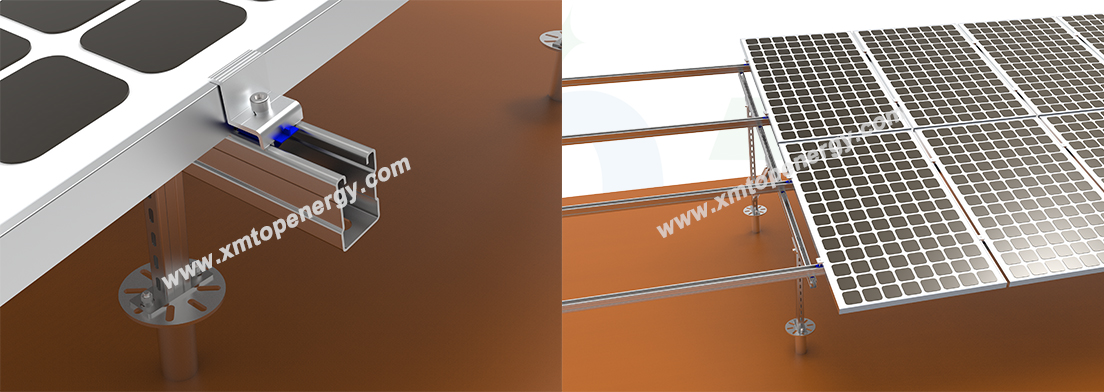
As solar energy continues to power more of the world, the importance of strong and dependable support structures can't be overstated. For solar professionals aiming to balance performance with affordability, carbon steel mounting solutions with hot-dip galvanized protection have emerged as a preferred choice. These rugged ground installations are particularly well-suited for utility-scale projects and sites with uneven or inclined terrain, offering a flexible and resilient alternative to traditional mounting systems.


HDG steel solar mounts solutions


Strength and Stability with Carbon Steel

One of the major advantages of HDG steel solar mounts is their exceptional strength. Manufactured from carbon steel and coated with a hot-dip galvanized finish, these structures are built to withstand harsh environmental conditions over the long term. They offer high structural stability, making them suitable for open fields, hilly regions, and uneven terrain.

Whether the installation site is flat or on a slope hill, the flexibility of this solar ground mount allows engineers to adjust the system design without compromising panel performance or structural safety.


Long Service Life with Anti-Corrosion Protection

Durability is a non-negotiable factor in solar infrastructure. Our HDG solar mounting system ensures long-term outdoor use by providing superior corrosion resistance. The hot-dip galvanized coating shields the carbon steel frame against moisture, rust, and other environmental threats—delivering peace of mind and reducing maintenance costs over time.


HDG steel solar mounts


Cost-Effective Without Compromising Quality

Thanks to the material characteristics of carbon steel, this hot-dip galvanized ground solar mount offers a more budget-friendly alternative to aluminum systems. While slightly heavier (which may affect shipping costs), the structural integrity and lower material cost make it a preferred solution for utility-scale and commercial solar projects.


Simple Design, Easy Installation

Engineered for efficiency, this easy-install solar ground system features a simple layout that streamlines the assembly process. Its modular design supports fast deployment, helping contractors save time and labor expenses on site. It's also compatible with both framed and frameless bifacial solar panels, making it highly adaptable for various system configurations.


Conclusion

If you’re planning a ground-mounted solar project—whether in a flat open field or across uneven terrain—our HDG steel solar mounts deliver the strength, simplicity, and durability needed for long-term energy generation. Combining solid engineering with cost-effective materials, this solution is a smart investment for solar developers who value performance and practicality.

Interested in learning more? Contact our team today for technical details, quotations, or sample designs tailored to your project.

How Does China's Energy Storage Market Change in 2024?

According to public data from Gaogong Industry Research Institute, the total shipments of China's energy storage market in 2024 will be 337.8GWh, a year-on-year increase of 64% compared to the total shipments of 206GWh in 2023. From the distribution of shipments in the market segments, the power storage market is still the main market, with a shipment share increase of nearly 7%, reaching 88% of the total share.


In terms of power storage, around March 2024, the 280Ah same-size battery cell 314Ah will gradually be mass-produced, and the 314Ah battery cell and the corresponding 20-foot 5MWh container will accelerate the penetration of the power storage market, with an annual penetration rate of over 40%, of which the highest monthly shipment penetration rate exceeds 90%. It is expected that the 314Ah battery cell will completely replace the 280Ah in 2025. In addition, the total capacity of energy storage batteries is 610GWh, of which the 280Ah and 314Ah cells with a specification of 71*173*207mm have a total capacity of 440GWh, which is expected to increase to more than 530GWh by 2025.


In February 2025, Gaogong officially released the list of energy storage lithium batteries in 2024:

    In terms of communication energy storage, in 2024, only China Mobile Communications will bid for a centralized procurement of 1.19GWh lithium iron phosphate batteries. Therefore, in 2024, the energy storage lithium battery will only be 1.19GWh, a year-on-year decline of more than 85%.

    In terms of household energy storage, since the general distribution capacity of household energy storage systems is 5~10kWh, the market is still dominated by 50Ah~100Ah cells, among which the more popular cell products are 50*160*118mm in size. In 2024, the shipment volume of household energy storage batteries will be 24.9GWh, a year-on-year increase of 24.5%, most of which will be sold to Europe.


In terms of portable energy storage, the portable energy storage market will shrink relatively in 2024, with annual shipments of 2.81GWh, a year-on-year decrease of nearly 30%, mainly affected by the overall market involution and the low technical threshold of portable energy storage products.


In terms of industrial and commercial energy storage, the industrial and commercial energy storage market will ship 11.8GWh in 2024, a year-on-year increase of 68.6%. Usually, when industry statistics are compiled, industrial and commercial data are generally attributed to power energy storage. The reason is that the usage attributes are consistent, all of which are derived from power dispatching needs, and the battery products used are consistent. Generally, 71*173*207mm battery cells and 1P52S battery packs are used, which are the same as power energy storage. There are only differences in application scenarios and operators. After the release of the "cancellation of mandatory storage" policy, the power storage market may be market-oriented. Then, whether for operator considerations or cost considerations, industrial and commercial energy storage may directly introduce 20-foot container-type [currently outdoor cabinet-type] to reduce costs.